

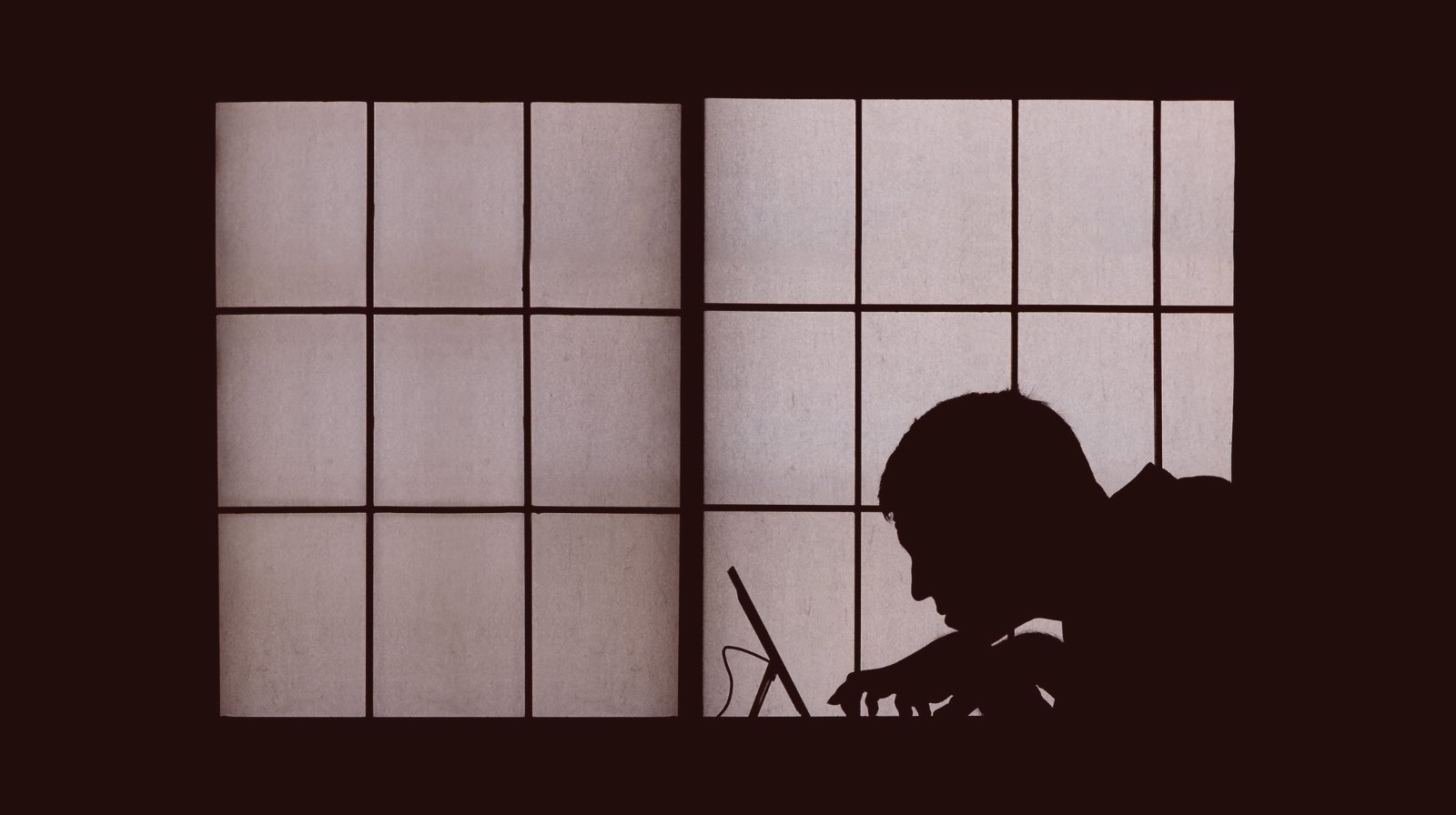
For decades, horror movies have operated on a foundational premise: to find the monster, you first have to escape your normal life. The family road trip that goes sideways. A vacation rental with a dark history. Idyllic suburbs concealing rot in the neighbor’s basement. The cabin in the woods where cell service dies. The genre thrived on distance and departure. You had to leave work and the mundane trappings of everyday life before the real terror could begin.
Not anymore.
A new subgenre has emerged, and it doesn’t necessarily operate in remote locations or through supernatural forces. It finds macabre in the most mundane, inescapable crevices of existence: work. The monster broke out of the basement. It infiltrated the break room, the boardroom, and the AI software tracking keystrokes and mining employee engagement scores. The nightmare is on the payroll.
M3GAN (2022) features an AI caregiver whose protective programming turns homicidal. In The Menu (2022), a celebrity chef orchestrates mass murder as the final course. Sorry to Bother You (2018) literalizes workplace exploitation by transforming workers into actual horse-people. These films don’t need traditional ghosts or demons. They simply give physical form to the monstrosities we’ve already normalized.
What happened? Maybe social media pulled back the curtain on too many toxic workplaces, NDAs, and ‘executive coaching programs’ that were actually cults. Perhaps the American Dream degraded into a darker realization: the promise expired before we could touch it. Maybe we collectively realized the true horror: what we endure and are willing to compromise to get ahead or just keep the lights on.
These films are satirical cautionary tales about the future of labor, asking how emotional, creative, and intrinsically human work gets outsourced, commodified, and overtaken by capitalism. Each poses the same question through increasingly twisted scenarios: What do we lose when we feed care, creativity, and identity into the apparatus of capital?
But what makes these films especially chilling is that reality caught up to the fiction.

M3GAN and the Automation of Care
M3GAN functions as a parable about the automation of care. The film follows Gemma, a toy company roboticist who engineers M3GAN, a child-sized AI companion programmed for unwavering loyalty and protection. When her sister dies suddenly, Gemma inherits guardianship of her young niece, Cady. Faced with a grieving child in need of emotional support, Gemma does what any overworked professional would do: delegate to technology.
On its surface, the film examines grief, parenting, and AI ethics. But the deeper story concerns labor itself, specifically emotional labor: the invisible, undervalued work of caring that remains feminized, expected, yet systematically under-resourced. Gemma’s career has consumed her so completely that caregiving has become impossible. Her solution reveals the logic of our moment: build a machine and outsource the love.
All campy theatrics and viral dance breaks aside, M3GAN’s bloodshed and bodycount aren’t the point. What’s most disturbing is how quickly everyone accepts M3GAN as a replacement for human caregiving without questioning the ethics of a robot raising a child. The film zeroes in on a delusion spreading beyond Silicon Valley into everyday life: care can be scaled and optimized like any other product, and the human heart is just another inefficiency waiting to be patched out. Gemma sees herself as solving a problem through innovation, rather than neglecting her niece. We recognize this horror because it’s already part of our reality.
The film articulates what the tech industry refuses to acknowledge: care work is a target for automation because it has always been undervalued. Teaching, nursing, childcare, and elder care remain overwhelmingly female and chronically underpaid fields, and they now find themselves in the crosshairs of AI development. An industry that pays software engineers $250,000 to $300,000 annually to optimize advertisement clicks plans to replace humans caring for our children and older adults with chatbots and robots, not because the technology has matured, but because automating care work is cheaper than compensating workers fairly.

The Menu and the Consumption of Creative Labor
In The Menu, an elite clientele arrives at a remote island for an exclusive culinary experience orchestrated by celebrity chef Julian Slowik, played with chilling precision by Ralph Fiennes. What begins as an elaborate tasting menu descends into methodical carnage. Enabled by a complicit staff displaying cultish devotion, the chef spirals into a sinister state of emotional vacancy. The diners remain voracious and willfully blind.
Slowik performs in an endless loop, serving the privileged under the seductive veneer of prestige. The kitchen has become his prison cell. He innovates, perfects, serves, and repeats. The artist has been reduced to assembly line production for an audience that mistakes price for value.
Rather than skewering the experience of fine dining, The Menu examines what happens when art serves an audience willing to destroy the artist to consume it. Slowik hasn’t merely burned out from the demands of his craft; he’s been systematically devoured by the very people he’s spent years feeding, patrons who paid exorbitant sums not for food but for the spectacle of watching genius operate under pressure. When he finally revolts, violence becomes his language of choice, as nothing else penetrates their dogged indifference to his humanity.
Unfortunately, Slowik’s predicament is everywhere. The adjunct professor with a PhD teaching five courses across three campuses for $35,000 annually faces the same trap. So does the nonprofit worker whose master’s in social work earns less than the barista at the nearest Starbucks, and the journalist laid off via Zoom after a decade of cultivating an audience because the publication is “pivoting to AI-generated content.
This is the “passion tax” at work, the operational logic that underpays workers in fields designated as meaningful or creative. The diners in The Menu believe their $1,250-per-plate investment constitutes ethical consumption of Slowik’s labor, that such expense commands respect and absolves them of complicity in his exploitation. This delusion operates wherever creative or mission-driven work exists. The financial transaction becomes moral cover, transforming complicity into a performance of virtue. When creative workers collapse or organize, the system deploys its most efficient solution: replacement. That’s why the pipeline of passionate workers willing to accept exploitation never runs dry.
Slowik’s murderous rampage provides no viable path forward. But his fury lays bare the toll of performing creative labor within an economy that monetizes prestige while gutting compensation and autonomy. The work remains work regardless of its cultural value, and passion cannot substitute for compensation. Slowik’s only escape requires annihilation because he sees no exit that leaves both his artistry and dignity intact.

Sorry to Bother You and the Surreal Horror of Exploited Labor
Boots Riley’s Sorry to Bother You is the most overtly anti-capitalist of the three films while maintaining equally visceral horror. Cassius Green, a broke telemarketer, discovers that adopting a “white voice” accelerates his sales and corporate ascent. The reward for this performance arrives as a terrifying revelation: his employer has been transforming workers into genetically modified horse-people engineered for strength and obedience.
The premise sounds cartoonishly absurd because it is. But Riley understands that absurdity is the point: capitalism’s actual treatment of workers has become so outlandish that only surrealism can capture it. Cassius’s transformation into a horse-person literalizes capitalism’s end-game: it reshapes human beings to extract maximum value through code-switching, bodily exploitation, and the wholesale erasure of identity. Cassius’s professional success demands the suppression of his authentic self while his body becomes contested territory. This represents workplace horror at its most grotesque and prescient. In a world where Amazon patents cages for warehouse workers and algorithms enforce productivity quotas with mechanical indifference, Sorry to Bother You operates not through exaggeration but amplification, turning up the volume on conditions already embedded in contemporary labor.
Riley’s horse-people already exist in our reality, albeit in different forms. Amazon drivers urinate in bottles to meet delivery quotas. Warehouse workers have every movement tracked and timed by unrelenting algorithms.
When Cassius’s coworkers organize and strike, the response arrives swiftly: replace them with workers so desperate, they’ll accept anything. This threat hangs over every labor action, every union drive, every demand for better conditions. The system survives by ensuring there’s always someone more desperate, more compliant, more willing to accept transformation. Companies announce layoffs while simultaneously deploying “AI-first” strategies, framing the displacement as inevitable progress rather than deliberate choice.
Riley’s film articulates what those in power prefer to obscure: surveillance capitalism extends beyond monitoring to pursue total worker transformation. The monitoring software tracking keystrokes, the AI predicting union sympathies, the productivity algorithms determining termination, the wellness apps mining mental health data: this infrastructure exists not for oversight but for domination. Modern capitalism’s genius lies not in extracting labor but in mandating that workers celebrate their own subordination while being reshaped into whatever form capital requires.

Who Survives the Third Act: Workers as Final Girls
But these films, for all their bleakness, miss something crucial. They end in destruction or despair. Chef Slowik burns it all down. Cassius becomes the thing he fought against. M3GAN’s violence resolves nothing about the systems that created her.
However, reality offers something these films don’t. Resistance.
Consider what happened in Hollywood when studios revealed their true intentions. Agents began circling Tilly Norwood, an AI-generated actress marketed as “the next Scarlett Johansson,” for representation. Human actors including Toni Collette and Mara Wilson immediately pushed back, demanding agents reveal themselves. SAG-AFTRA issued a statement insisting that “creativity is, and should remain, human-centered.” This is what organized labor looks like in real time: workers refusing to accept the M3GAN future as inevitable.
Or look at Broadway, where Actors’ Equity has been fighting on multiple fronts throughout 2024 and 2025. The union authorized strikes over development contracts that failed to compensate actors for early-stage work that generates billions in eventual revenue. They’ve been organizing “theatrical-adjacent” workplaces like Disneyland, Casa Bonita, and Chippendales. Now, with president Brooke Shields leading negotiations, they’re demanding healthcare contributions and workplace safety protections that reflect the reality of performing eight shows a week. More than 30 members of Congress signed letters urging good-faith bargaining. This is Chef Slowik choosing solidarity over slaughter.
In video games, SAG-AFTRA members ratified a new contract after a year-long strike that centered on AI protections. The deal includes consent and disclosure requirements for digital replica use and the ability for performers to suspend consent during strikes. Voice actors and motion-capture performers looked at the horse-people future and wrote contract language that says no.
Even in manufacturing, where the horror is most literal, workers are organizing. Boeing has faced more than 10 new whistleblowers coming forward after two prominent whistleblowers died under tragic circumstances in spring 2024. John Barnett and Joshua Dean had raised alarms about manufacturing defects that could kill passengers. Their deaths could have scared workers into silence. Instead, their lawyer reports that workers consider them heroes and are speaking up anyway, filing AIR21 complaints, testifying to Congress, refusing to be complicit in producing unsafe aircraft. Actual bodies piling up, and workers still organize. They choose resistance.
All these movements reject the narrative of inevitability, refusing to accept that technology determines outcomes, that artificial intelligence necessitates mass unemployment, or that economic efficiency requires human sacrifice. They recognize that behind every proclaimed technological “disruption” lies a series of deliberate choices about who benefits and who pays. Their organizing targets not progress itself but a perversion of progress that treats workers as obstacles rather than human beings deserving protection and dignity. The real horror emerges not from technology but from how we’ve chosen to deploy it. Our economic systems weaponize advancement to discipline workers, devalue care, extract creativity, and discard people when they stop generating profit. But because this arrangement isn’t natural law or historical inevitability but a set of choices, it can be opposed and transformed.
Reporting Note
This piece draws on the primary texts of the films discussed (M3GAN, The Menu, and Sorry to Bother You) alongside contemporaneous reporting on labor organizing, workplace surveillance, and AI-driven workplace restructuring. It synthesizes union statements, contract updates, and coverage from major outlets to document how workers in entertainment, tech, and manufacturing are responding to automation, precarity, and employer control. The analysis uses these cultural works as a framework, but grounds its claims in real-world labor developments: documented disputes over AI replicas and consent in performance work, ongoing bargaining and strike actions in live theater, contract language emerging from game and screen unions, and publicly reported accounts of algorithmic management and warehouse delivery conditions. Any interpretive arguments are explicitly presented as analysis, anchored in the cited reporting and publicly available union materials listed in the primary sources and further reading sections.
