

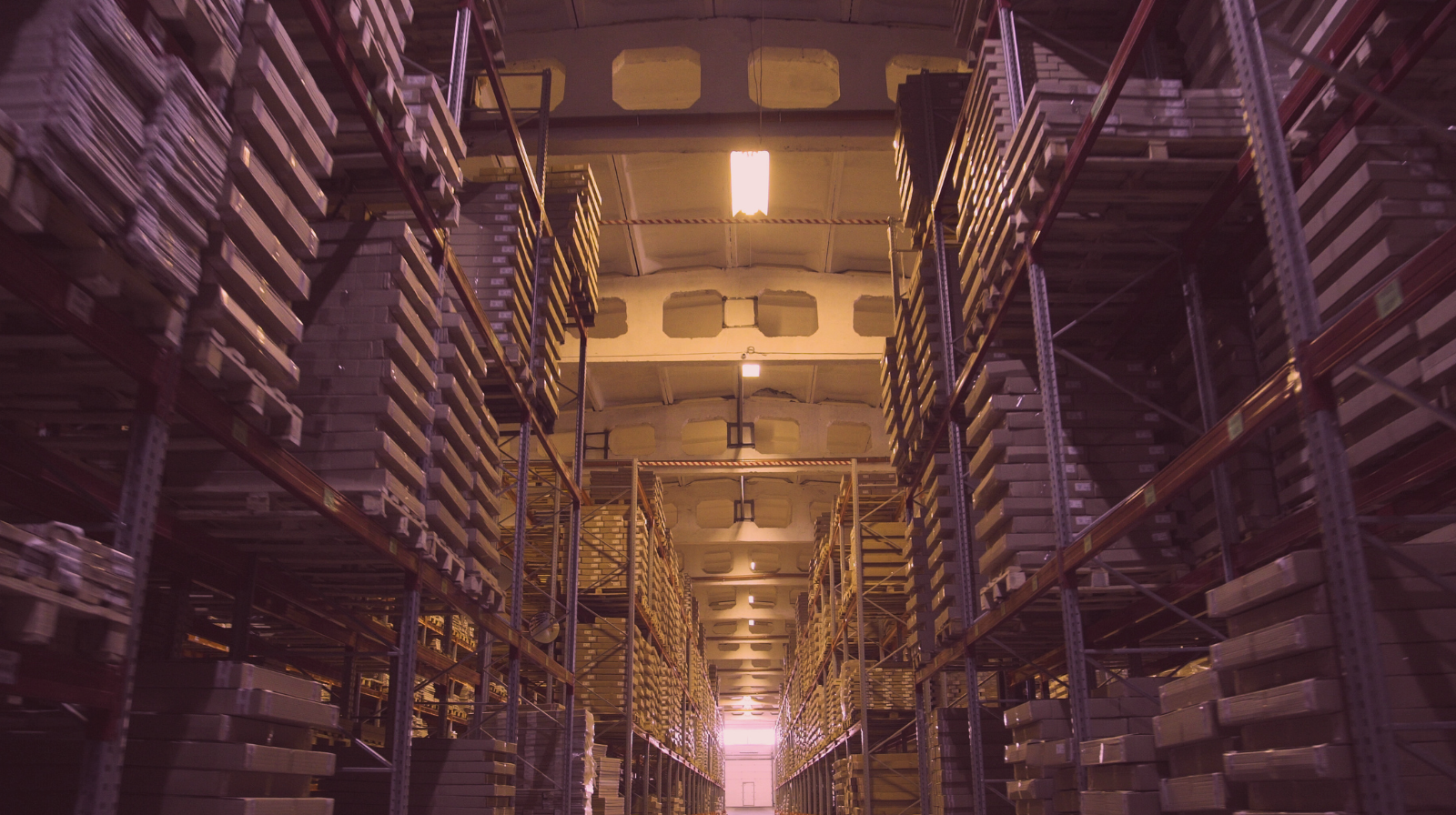
At 2 a.m., the arresting chemical stench hits before the lights come on. The overnight cleaning crew is already inside the Amazon warehouse, past a million square feet of concrete still warm from the day’s labor. They will spend the next eight hours stripping wax, spraying disinfectants, and inhaling whatever rises up from the floor.
Scenes like this play out across America every night: in schools after children leave, in hospitals between patient rounds, and in office towers while executives sleep. A hidden workforce cleans these buildings once everyone else has gone home. In the past ten weeks, the agencies meant to protect them have all but collapsed.
The 43-day government shutdown halted workplace safety inspections across the country. OSHA, already cut by DOGE, furloughed three-quarters of its remaining staff. Last week, the EPA reopened its assessment of formaldehyde, a chemical in floor finishes the agency had declared dangerous eleven months earlier. Currently, the Trump administration is moving to weaken the nation’s primary chemical safety law, and few in Washington are discussing what this means for the workers inhaling chemicals.

A Chemical Surge Hiding in Plain Sight
When University of North Carolina researchers monitored indoor air during a standard floor waxing, what they found was alarming. Before the cleaning began, the air contained only trace amounts of 6:2 FTOH, a fluorotelomer alcohol belonging to the notorious PFAS family of “forever chemicals.” But once cleaning started, concentrations hit 457 nanograms per cubic meter, nearly 200 times typical levels.
“Most people don’t realize they’re being exposed to these chemicals,” said Dr. Jason Surratt, the study’s senior author. “Our goal is to fill in those gaps and give people, especially workers, the information they need to protect themselves.”
The study, published in Environmental Science & Technology Letters, revealed that each layer of wax brought a new burst of emissions, with the highest release during the first coat. When inhaled, 6:2 FTOH breaks down into other toxic PFAS linked to cancer, autoimmune diseases, and developmental problems. The researchers noted their test site, a university lab with excellent ventilation, represented a best-case scenario. In schools, offices, or warehouses with substandard ventilation, the same floor waxing could produce far higher exposures. In 500 investigations of indoor air quality problems, the National Institute for Occupational Safety and Health found that inadequate ventilation was the primary cause 52% of the time.
What the UNC researchers documented in a controlled university setting is replicated every night in buildings with worse ventilation, longer shifts, and workers who have never seen a safety data sheet for the chemicals in their mop buckets.

The Regulatory Retreat
Health and labor groups have raised alarms about proposed changes to the Toxic Substances Control Act (TSCA), which mandates the EPA evaluate chemicals before they reach the market. The Trump EPA wants to roll back Biden-era rules requiring consideration of every use and exposure route of a chemical.
Most troubling is a provision allowing the EPA to assume protective equipment is always worn properly when evaluating risk. Labor groups call this assumption both dangerous and divorced from reality.
“Staff frequently work with small manufacturers via on-site visits… they consistently observe improper use of PPE, or no use at all,” Colin Hannahan, a policy analyst at the Toxics Use Reduction Institute of Massachusetts, told the EPA during the public comment period. “Assuming the workers are properly wearing PPE 100% of the time may not lead to a risk evaluation which properly captures worker exposure.”
The California Nurses for Environmental Health and Justice went further in their comment letter: the EPA should “be realistic and assume no PPE and industrial controls are being used… EPA should protect people’s health, not industry’s.”
Beyond individual comments, the AFL-CIO, representing 63 unions and 15 million workers, has formally opposed the rollbacks. In a letter to Congress, the federation cited 135,000 annual U.S. worker deaths from occupational disease, many due to chemical exposure. The proposed changes, they argued, would make this toll worse by creating “the illusion chemical risks are below reality.”
“It is unreasonable for the agency to assume all workers wear respirators all day every day,” the AFL-CIO wrote. “Respirators can be uncomfortable, ill-fitting, make communication difficult and are the least-effective form of workplace protection.”
In January 2025, the EPA determined formaldehyde is dangerous, and the law required protective regulations to follow. But now eleven months later, the agency is reconsidering its own findings. Workers who handle formaldehyde every night still have no new protections. The American Chemistry Council, which lobbies for chemical manufacturers, welcomed the reversal.

The Subcontracting Shield
The regulatory fight unfolds against a labor market structure in which accountability has become nearly impossible to establish. The cleaning industry operates through layers of subcontracting that distance major corporations from the workers who maintain their facilities. A Fortune 500 company hires a facilities firm, which hires a cleaning company, which hires a staffing agency to supply workers. By the time a janitor shows up with a mop bucket full of industrial chemicals, they may be three or four corporate layers removed from the entity whose logo is on the building.
The structure fragments responsibility so thoroughly that no one can be held accountable. When a worker develops respiratory illness, who failed to provide training? Who selected the chemicals? Who should have ensured ventilation? Contractors blame clients; clients blame contractors. The cleaning workforce is disproportionately immigrant, often with limited English or precarious status, and these workers have little leverage to demand answers from anyone.
Research on subcontracting in the cleaning sector has shown how this fragmentation erodes working conditions. As contracts cascade, each layer takes a cut, leaving workers with lower pay, harder work, and minimal safety. During the COVID-19 pandemic, cleaning workers reported being asked to use ” more heavy duty chemicals” without being told what those chemicals were or how to protect themselves. They were afraid to ask questions because they could not afford to lose their jobs.
“You look at who’s making the changes and it’s always well-resourced individuals, it’s well-resourced schools, it’s the big companies,” Allen has noted. “I’m not worried about them… but this is a huge equity issue.” The workers who clean those upgraded buildings, employed through layers of subcontracting, are not the ones breathing the improved air.
Meanwhile, NIOSH acknowledges cleaning chemicals cause hazards “ranging from skin rashes and burns to coughing and asthma,” and OSHA publishes toolkits for transitioning to safer chemicals. But these resources assume a direct employment relationship. For subcontracted janitors, there may be no clear employer to engage.

The Industrial Footprint We Never Talk About
The rapid expansion of e-commerce has transformed American logistics, creating a sprawling network of fulfillment centers, distribution hubs, and last-mile facilities. These buildings, often approaching one million square feet and employing more than a thousand workers per shift, require constant cleaning. The concrete floors accumulate dust, debris, and residue from packaging materials. Spills must be addressed. Restrooms need continuous attention.
What distinguishes warehouses from other commercial cleaning environments is scale combined with minimal oversight. Unlike hospitals, which face regulatory scrutiny over infection control, or schools, where cleanliness is high on the minds of parents, warehouse cleaning happens in buildings most consumers never see. The workers are invisible to the public, and their chemical exposures rarely show up on any regulator’s radar.
In particular, Volatile organic compounds (VOCs) present particular risks in these enclosed industrial spaces. These chemicals, found in floor waxes, disinfectants, and cleaning solvents, have high vapor pressure at room temperature, meaning they readily become airborne. Concentrations of VOCs indoors can reach levels up to ten times higher than outdoors. Health effects include eye, nose, and throat irritation, headaches, liver and kidney damage, and, for some compounds, cancer.
In fact, peer-reviewed studies show hospital cleaning staff, especially those waxing floors or using quaternary ammonium and chlorine-based products, face higher VOC exposure than other healthcare workers. While this data reflects a sector with at least some regulatory oversight, most commercial buildings have far less.
“If you look at the way we design and operate buildings, and I mean offices, schools, local coffee shops, we haven’t designed for health,” Joseph Allen, director of Harvard’s Healthy Buildings Program, told CBS News. “We have bare minimum standards.”

Where Chemical Policy and Reality Part Ways
The proposed TSCA rollbacks have drawn opposition from an unusual coalition. Environmental groups like Earthjustice and the Sierra Club have joined with industrial unions like the United Steelworkers and United Auto Workers. The Environmental Defense Fund commissioned a poll finding that 82% of registered voters, across party lines, support maintaining current chemical safety protections.
Yet industry groups continue to push, arguing chemical reviews hamper innovation and American competitiveness. The National Association of Manufacturers has praised the administration’s plan to “right-size chemical risk evaluation.” House Republicans are drafting legislation to further weaken TSCA.
But the people most affected by these decisions, the cleaners working the overnight shift, are largely absent from the policy debate. They have no lobbyists, no capacity to take unpaid leave for a three-minute public comment in Washington, and no shared employer against whom to organize. The subcontracting structure that employs them was designed, in part, to ensure exactly this silence. They clean the buildings where policy is made and vanish before the people who make it arrive.
The AFL-CIO letter to Congress noted that “despite Congressional intent that the public have a role in the new chemical review process, the current process has become a two-way conversation between chemical manufacturers and EPA.” Comment periods open and close, hearings convene and adjourn, and every night the cleaning crews return to warehouses across the country, unaware that debates about their lungs are being conducted without them.
Reporting Note
This article draws on original reporting, government records, regulatory filings, public comment submissions, and journalism from labor, environmental health, and workplace safety organizations, including materials from the AFL-CIO, the U.S. Environmental Protection Agency, OSHA, NIOSH, and university-based public research initiatives, alongside coverage from The New Lede, CBS News, People’s World, and other national outlets. It also draws on publicly available scientific studies, indoor air quality investigations, and labor research examining chemical exposure, subcontracting, and workplace safety in the cleaning and facilities industries, as well as historical reporting on deregulation and its impact on workers.
