

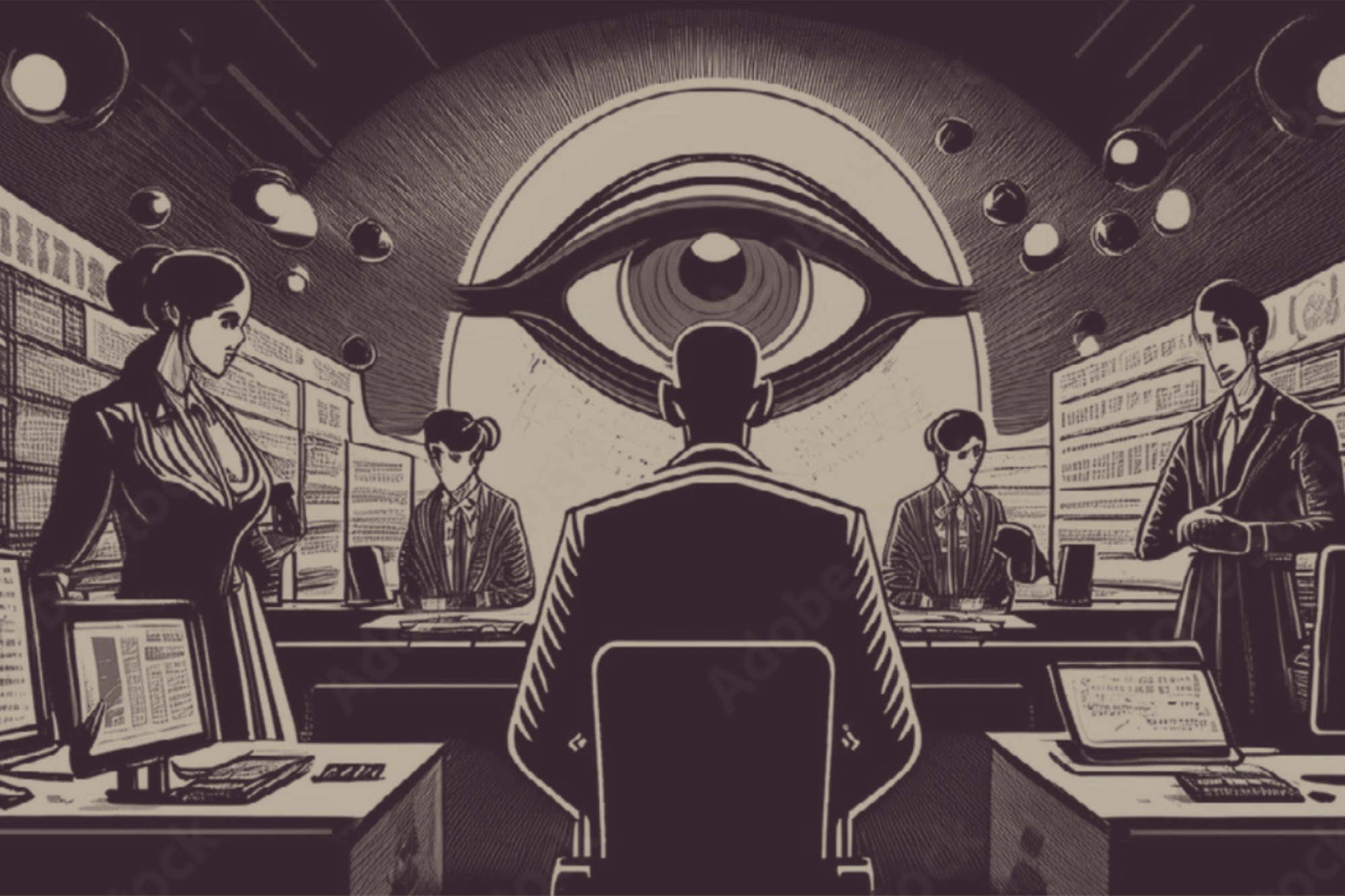
When George Orwell introduced us to O’Brien in his dystopian masterwork 1984, he didn’t give us a cartoonish tyrant. He gave us something far more chilling: a calm, articulate, bureaucratic villain. O’Brien never yells; he explains. He never threatens; he informs. And in the end, he breaks Winston through procedure alone.
What makes O’Brien so unsettling is how eerily familiar his leadership style feels in today’s professional landscape. At first glance, he appears loyal, eloquent, and invested in your success. He makes you feel seen, until he doesn’t. The mentorship masks manipulation, the structure enables surveillance, and the loyalty demands leverage.
Why Has O’Brien’s Playbook Become the Default?
In an era of layoffs repackaged as “transitions,” performance reviews weaponized as psychological warfare, and toxic positivity deployed to mask structural harm, O’Brien’s leadership model hasn’t just survived. It has metastasized. What once read as dystopian fiction now doubles as a corporate playbook.
How did we get here? Several factors converged:
Corporate Professionalism, as an ideology, was weaponized to reward compliance over creativity. A generation of managers decided that neutrality, emotional detachment, and rigid hierarchy were the hallmarks of competence. O’Brien’s cold, calculated demeanor became the gold standard. It minimized risk and made dissent easier to dismiss.
The Rise of Surveillance Capitalism turned digital tools once marketed as productivity boosters into silent enforcers. From keystroke tracking to AI-driven performance scoring, modern workplaces have embraced monitoring systems that would make Big Brother proud. Workers now internalize scrutiny, self-police under pressure, and hesitate to question leadership for fear of invisible consequences.
Toxic Positivity & Weaponized Empowerment allow employers to co-opt language meant to humanize the workplace. “We’re a family,” they say, while demanding loyalty without reciprocity. These phrases become traps. They sound comforting, yet they deflect accountability, suppress criticism, and disguise exploitation as opportunity.
Neoliberal Work Ideology recast labor itself as identity, purpose, and morality after policymakers dismantled public safety nets. You’re building a brand, the thinking goes. Living your passion. Showing gratitude for the grind. Under this framework, questioning toxic dynamics gets reframed as a character flaw.
The Illusion of Belonging
Perhaps O’Brien’s most powerful weapon was never torture. It was intimacy. He convinced Winston they were aligned, that they shared a secret truth. Modern toxic leaders deploy the same tactics. They flatter you with inclusion, invite you to speak freely, and preach values like “transparency” and “psychological safety.” Beneath that surface, however, lies a power structure designed to extract rather than uplift.
Carefully curated language maintains the illusion of belonging. “We’re all in this together.” “You’re not just an employee; you’re family.” These sentiments create a false sense of security, so when leadership ignores your voice or steamrolls your boundaries, the cognitive dissonance doesn’t spark rebellion. It sparks self-doubt. Maybe I misunderstood. Maybe the problem is me. But that confusion is precisely the point. If you’re busy distrusting yourself, you’re not questioning the system.
In toxic environments, vulnerability is harvested rather than honored. Confiding in leadership becomes a risk. Speaking up becomes a liability. And when retaliation comes cloaked in HR language and vague “fit” concerns, it becomes harder to name what’s happening.
This is how toxic workplaces erode confidence while performing compassion. O’Brien has traded his Party uniform for a lanyard and blazer. He tells you to “bring your whole self to work,” just before using it against you.
What Remains for Workers
A ruthless employment regime demands total allegiance, rewrites truth as needed, and punishes dissent. Employees emerge from these environments overworked, mentally disoriented, and emotionally depleted. Like Winston, many begin to believe the very systems that debilitate them are the ones protecting them.
Here lies the crucial insight about O’Brien that makes his model so durable and so appealing to modern institutions. His malice was never personal. It was systemic. By today’s standards, O’Brien would be considered a model employee turned ideal supervisor. And that’s why he keeps getting promoted.
So What Do We Do?
We need to stop mistaking compliance for professionalism. We must stop praising leaders who “stay calm under pressure” while quietly crushing anyone who disagrees. Constant oversight, permission-seeking, and performative availability should be recognized for what they are: mechanisms of iron-fisted dominance.
Winston never escaped. But we can.
We’ve seen behind the curtain. We understand O’Brien isn’t confined to being a novel’s primary antagonist. He lurks in performance reviews crafted to undermine confidence and cheery emails about “realignment.” He lives on in every manager who punishes self-expression and rewards submission.
But his power is temporary. We are not obligated to choose this thankless future for ourselves.
We can defeat O’Brien. We do so by replacing him. With mutual care instead of manufactured fear. With worker-led systems instead of corporate gaslighting masquerading as purpose.
Blind obedience won’t build the future of work. Truth-telling will. And so will the wild, radical belief that we deserve better. Not someday, but now.
O’Brien wanted us to love Big Brother. We don’t. And we never will.
