

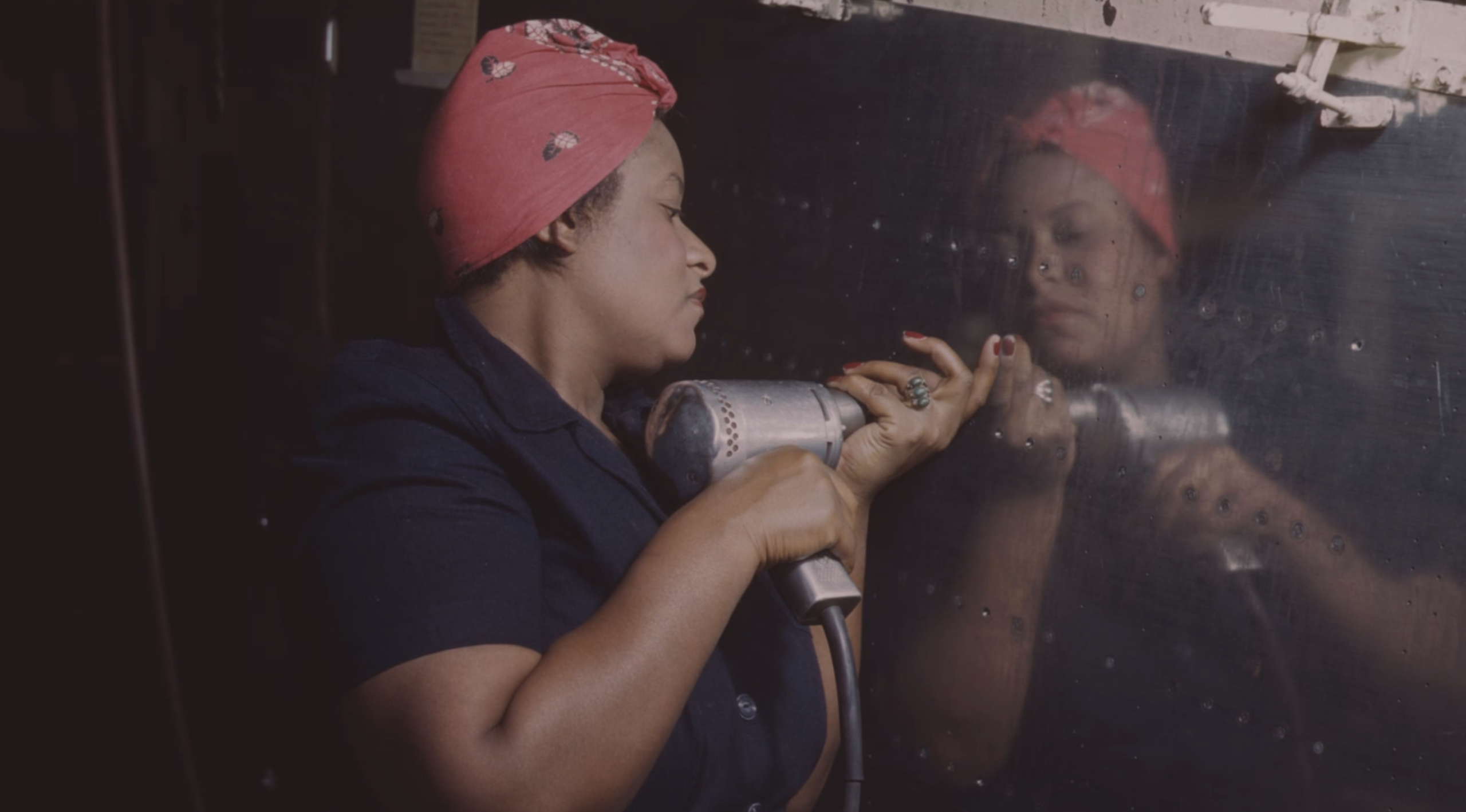
Everyone knows Rosie the Riveter, or at least the sanitized version plastered on mugs and T-shirts.
In the American imagination, She’s the white woman in the polka-dot bandana, flexing her bicep under the slogan “We Can Do It!” She’s celebrated as a patriotic symbol of women’s labor power. She is determined, strong, and ready to roll up her sleeves for the war effort. But that poster was propaganda, and like most propaganda, only represented a fraction of the story.
The truth is more complicated, and much more crowded.
Because the real Rosie wasn’t one woman, and she sure as hell wasn’t just white. During World War II, thousands of Black, Latina, and Indigenous women stepped into shipyards, munitions plants, and factories. They welded steel, riveted planes, and kept production lines moving while raising families and holding entire communities together. They faced racism on the job, dangerous conditions on the floor, and outright hostility from co-workers and bosses. And when the war ended, their contributions were scrubbed clean out of Rosie post-war legacy.
That wasn’t an oversight. It was a choice.

The Rosie Myth Was Never Meant for Everyone
Let’s set the record straight: the now-iconic famous We Can Do It! poster wasn’t plastered all over factory walls in the 1940s. It was one of dozens of in-house morale boosters churned out by Westinghouse Electric, aimed squarely at white, middle-class women who’d never set foot in a machine shop before. The message was clear: roll up your sleeves, be patriotic, and remember this is temporary. Uncle Sam needed a certain kind of worker, and he knew exactly which demographic he wanted to reach.
Meanwhile, women of color had already been hard at work. They were holding down low-paid jobs in fields, kitchens, and other people’s homes long before the war effort came calling. When factories finally cracked their doors open, Black, Latina, and Indigenous women rushed in, not because glossy posters beckoned them, but because they needed the work. They faced racist gatekeepers, segregated training, and constant hostility, but they showed up anyway.
Executive Order 8802, signed by Franklin D. Roosevelt in 1941, technically banned discriminatory hiring in defense industries, but enforcement was weak. The Fair Employment Practice Committee (FEPC) was underfunded and routinely ignored by employers who knew they could get away with it.
The public-facing Rosie was never made to look like them because the propaganda wasn’t meant for them. This exclusion was intentional policy. Wartime recruitment campaigns deliberately targeted white women for temporary roles while planning their postwar return to traditional gender hierarchies. Magazine covers, advertisements, and Hollywood films glorified white women’s patriotism while systematically erasing women of color from the narrative. Decades of archival neglect and uncritical repetition cemented a whitewashed version of history where women of color simply didn’t exist. It was propaganda doing exactly what it was designed to do.

The Other Rosies
Black women became welders, machinists, and crane operators in places like the Kaiser Shipyards in Richmond, California, and the converted auto plants of Detroit. Many were recruited from the South through the Second Great Migration, only to face segregated facilities, exclusion from skilled training programs, and “last hired, first fired” policies. As one worker recalled decades later, “We were told we were there for the duration. But when the men came home, we were told to go back to cleaning houses.”
Mexican-American women flooded into aircraft factories in Los Angeles and San Diego, while others labored in shipyards and canneries along the Texas and Gulf Coast. They balanced factory shifts with caregiving duties, often in multigenerational households strained by the Bracero Program’s reshaping of local labor markets.
Indigenous women left reservations for the first time to work in ordnance plants and machine shops across the country. Many found themselves isolated, targeted by both racism and sexism, and forced to navigate workplaces where their rural backgrounds were mocked as much as their tribal identities. They faced language barriers, the displacement of being far from home, and the constant suspicion that they didn’t belong.

On the Shop Floor: Work and Resistance
For many of these women, the work itself was only half the battle. They weren’t just working, they were fighting: for equal pay, for integration, and for a foothold in industries that had never wanted them. They were often assigned the dirtiest or most dangerous jobs, paid less than white women for the same work, and targeted by co-workers’ hostility.
Some unions under the CIO banner stood up for them, pushing for fair pay and integrated shops. Others slammed the door shut, keeping locals segregated and blocking women of color from leadership. positions. But these workers didn’t wait for permission. Still, they organized anyway, filing grievances, forging alliances across the shop floor, and pressing for seniority protections so they couldn’t be tossed aside when layoffs came.
In 1943, racial tensions exploded at the Packard plant in Detroit when Black workers were promoted to skilled positions, sparking violent clashes that shut down production. The violence hammered home that wartime unity was fragile, and women of color could never take solidarity for granted.

The Double Displacement After the War
When the war ended, “returning soldiers get their jobs back” became policy, but the displacement wasn’t equal. Women of color were often the first out the door, long before white women, despite having seniority and proven skills. The very industries that had desperately recruited them now treated their labor as expendable.
The postwar economy actively excluded them from the prosperity they had helped create. Many wartime skills didn’t translate into postwar hiring when employers suddenly rediscovered “qualifications” that mysteriously favored white applicants. Discriminatory GI Bill administration meant fewer avenues to training or stable employment through veterans’ benefits. While white veterans could access college education and home loans that built the suburban middle class, Black and other minority veterans faced systematic exclusion from these programs.
Meanwhile, the labor movement largely abandoned them. Unions that had grudgingly accepted integration during the labor shortage now prioritized white male members. Women of color found themselves fighting not just employers but their own supposed allies for basic protections.
By the late 1940s, much of this workforce had been forced back into the lower-paid service and agricultural jobs they’d escaped during wartime, as if their industrial skills and contributions had simply vanished. Their wartime labor, vital to Allied victory, faded from public view alongside any recognition of their skills, sacrifice, and organizing.

Why This Erasure Matters
The selective memory of the Rosie story has consequences today. When historians and media erase women of color from labor history, it becomes easier for organizers to sideline their leadership in current movements, treat their demands as secondary, and repeat the same exclusions that have always weakened working-class power.
This erasure also obscures crucial lessons about solidarity. The women of color who organized across racial lines during WWII, who filed grievances and built alliances despite hostility, developed strategies that today’s organizers desperately need. Their experience fighting both workplace exploitation and internal union discrimination offers a roadmap for building truly inclusive movements.
The fight to reclaim the ‘other Rosies’ goes beyond historical correction. It’s the difference between a labor movement that serves all workers and one doing bosses’ work by excluding the very people it claims to represent.

Reclaiming the Other Rosies
Projects like Black Rosies historical documentation and collections from the Rosie the Riveter/WWII Home Front National Historical Park are beginning to fill in the gaps. Latina and Indigenous women’s stories are surfacing in university archives, local museums, and community oral histories.
But the real work of reclamation happens when these stories inform current struggles. Women of color are leading labor campaigns in industries where exploitation is rampant, from Starbucks stores to Amazon warehouses to hospital systems. They’re using the same tactics their predecessors developed: cross-workplace organizing, coalition building, and refusing to let employers pit different groups of workers against each other.

Past Is Prologue
We’ve seen this erasure before, and we’ve seen it recently. During the COVID-19 pandemic, women of color comprised much of the ‘essential’ workforce in healthcare, retail, and logistics, yet politicians and media rarely centered them in public ‘hero’ narratives. When they organized for better safety equipment or hazard pay, they were suddenly less heroic, more expendable.
The pattern is the same: labor is celebrated when it’s useful to the economy, and forgotten when it challenges the status quo. Women of color get recruited when there’s a crisis, applauded when they’re compliant, and erased when they demand more than gratitude.
Rosie the Riveter was never one woman and never only white. She was the Black shipyard welder, the Mexican-American riveter, and the Indigenous machinist whose stories were deliberately erased. Telling the complete truth doesn’t change how we see the past. It shatters the limits of what we dare to fight for.
When we recognize that women of color have always led labor organizing, not just participated in it, we stop treating their current leadership as exceptional and start seeing it as essential. The other Rosies didn’t just build planes and ships. They built the blueprint for the inclusive labor movement we still need today.
Primary Sources:
- National Park Service, Rosie the Riveter/WWII Home Front National Historical Park
- Black Rosies Oral History Project archives (accessed 2025)
- Executive Order 8802 & Fair Employment Practice Committee records, U.S. National Archives
Further Reading:
- Sherna Berger Gluck (1987), Rosie the Riveter Revisited (offers foundational feminist labor history)
- Dr. Vicki Ruiz, Latina Wartime Workers and Their Communities, 1940–1960 (chronicles Latina labor and resistance dynamics)
- Dr. Keisha N. Blain, Set the World on Fire: Black Nationalist Women and the Global Fight for Freedom (examines Black women’s wartime and postwar organizing)
