

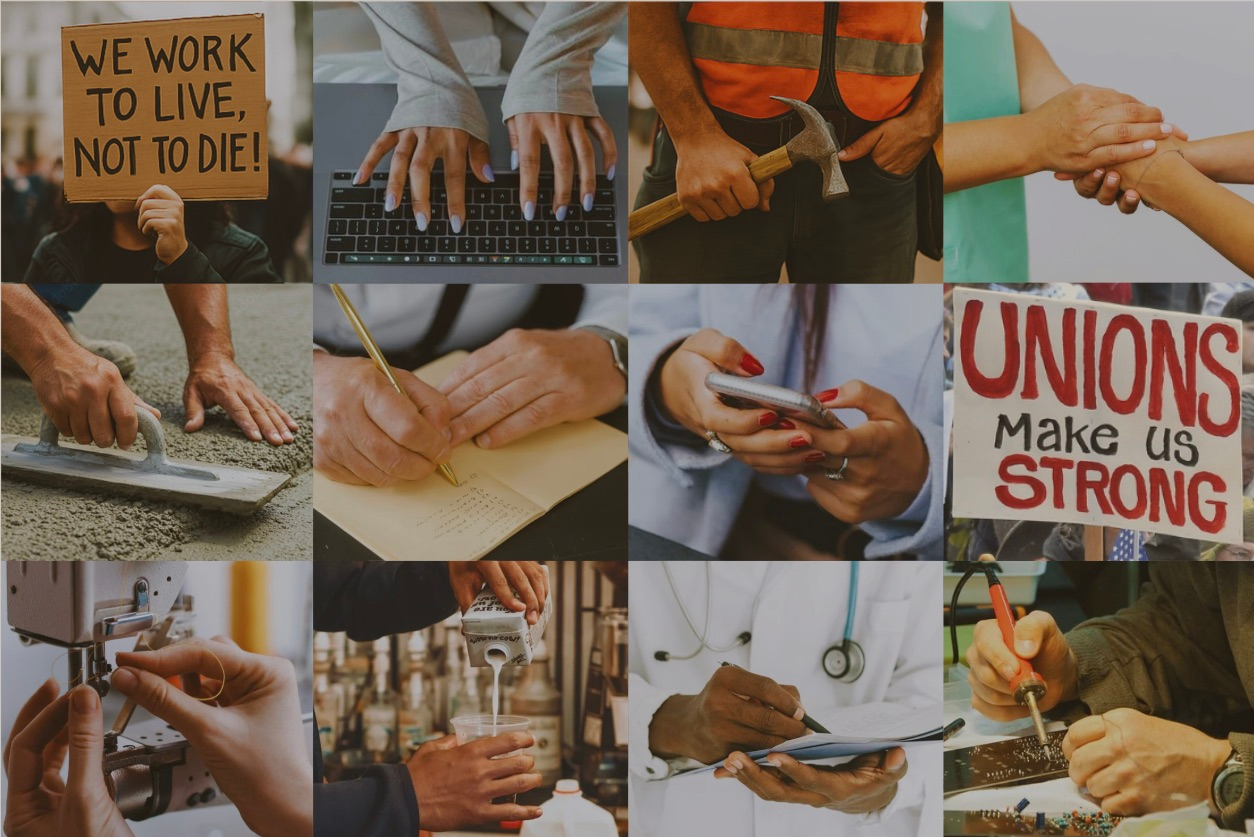
In the same year that worker strikes surged across industries, mass layoffs hit newsrooms from coast to coast. Labor reporters were among the first to go.
NBC quietly dissolved its labor desk. VICE, after filing for bankruptcy, laid off nearly every journalist covering labor. HuffPost gutted its editorial staff again. Business Insider, The Messenger, The Intercept, and NowThis all cut jobs. And now a devastating blow: Congress defunded the Corporation for Public Broadcasting, threatening local PBS and NPR affiliates nationwide.
At a moment when Americans are asking serious questions about what work is, who it serves, and who gets left behind, the people best equipped to report on those questions are being pushed out.
We’re living through a media crisis compounded by a labor crisis.
The stories being muffled and lost are urgent: algorithmic firings that strip workers of recourse, attacks on federal unions that threaten decades of protections, resurgent strikes among healthcare, food service, museum, and finance workers, the quiet punishment of Black and brown professionals who speak up in progressive workplaces, and the rot of at-will employment leaving millions vulnerable to termination without cause.
When mainstream outlets cover these issues, they often gut them into bland business headlines, sanitizing away systemic harm. Even solid local reporting stays trapped in regional silos, so workplace violations with national implications never break through to wider audiences and companies escape the scrutiny they deserve. This fragmented coverage creates information gaps that bad actors exploit, allowing them to control the narrative with PR spin while dodging accountability for major violations and abuses.
The truth is that corporate media was never built to cover labor with care. Most outlets rely on the same brands, industries, and investors that exploit the very workers journalists are writing about. That impossible chokehold has always existed, and it has simply become harder to ignore.
When Dysfunction Becomes Normal
This idea showed up in our everyday lives long before it made headlines.
In the past few years, we have watched talented friends lose their jobs with no warning, after pouring themselves into roles that promised growth but only brought grief. Companies chose short-term optics over long-term care, discarding brilliant and thoughtful professionals who had tried to improve their workplaces from the inside. These colleagues took on extra duties, supported their peers, and asked hard questions in rooms that did not welcome them. And then one day, they were gone, informed they were redundant while executives rebranded failure as strategy.
We have seen how institutions can sincerely aspire to equity while still reinforcing structures that stagnate real progress, how HR protocols get applied in ways that protect authority over accountability, and how that dysfunction takes its toll on dedicated, values-driven workers left demoralized by environments that reward compliance over courage. We have lived parts of it ourselves.ed parts of it ourselves.
What led to LaborWise was a mounting familiarity with a particular kind of workplace dissonance, one where bold public messaging is paired with behind-the-scenes dysfunction. You start to recognize the signs, and you realize that the problem extends far beyond a few bad actors to a broken system being quietly replicated across industries.
This connects to something deeper: mass layoffs announced by email, freelancers fighting for basic protections, small business owners squeezed by rising costs and race-to-the-bottom economics, educators working multiple jobs to stay afloat, independent contractors misclassified and underpaid and shut out of benefits, job seekers grinding through application hell and ghosted by institutions that claim to empower them. And when we push for change, we are dismissed as entitled, ungrateful, unrealistic. This goes far beyond workplace etiquette. It represents a structural failure of policy, unchecked power, and imagination.
Building Something Better
LaborWise exists to name the harm, trace the roots, and build a better way.
This is a publication for anyone whose employer overworked them, underpaid them, or terminated them unjustly, for those HR ghosted and those burning out, those struggling to make payroll and those locked out of job opportunities, those navigating toxic systems just to survive. It is also for those building something better, from grassroots organizers and labor leaders to freelance collectives, workforce developers, and entrepreneurs fighting for dignity in a rigged economy.
We believe labor is as much a cultural issue as a policy one, and we are here to expose the myths, uplift the resistance, and tell the stories that rarely make headlines but shape the future.
The stories we want to tell extend beyond job terminations or burnout to the systems that keep producing them and the people who bear the brunt. We want to connect the dots between policy decisions and lived realities, making workforce reforms legible to those stuck in application hell or navigating unstable gig work. We want to surface the tactics people use to survive toxic jobs without losing themselves, and explore how trauma gets embedded into our sense of professionalism. Most importantly, we want to decode the cultural myths we have inherited about what work should look like and who it is supposed to serve.
We also want to uplift the bright spots: the people who love their work, and the relationships, protections, and conditions that make that possible. When work is safe, supported, and rooted in dignity, it becomes something more than survival. It becomes joyful.
What You’ll Find Here
- Policy & Big Picture: Deep dives into workforce policy, gig economy reform, unemployment systems, and labor standards, written for the people who live its consequences. Whether you are self-employed, hiring staff, or applying to your 77th job, this column connects policy to real life.
- Toxic Work Survival Guide: Practical tools for navigating harmful jobs and recovering from the aftermath. From how to spot manipulation tactics to scripts for setting boundaries, this is for anyone stuck in the system and trying to survive with dignity.
- Labor of Thought: Essays and cultural analysis that decode the stories we are told about work, worth, and success. We unpack what is considered “professional,” who benefits from the rules, and how our narratives about labor are shaped, from Orwell to Office Space.
- Worker Reality Check: Examinations of the hidden labor conditions behind beloved brands, cultural institutions, and entertainment venues. Even the most magical experiences are often built on exploited work.
- Broken by Design: Exposés and investigations that follow the money and map the dysfunction. How toxic practices get embedded into business models, who profits from precarity, and what needs to change.
- Dispatches from the Frontlines: Stories of workers, organizers, and those resisting in real time. From strike lines to gig forums to kitchen tables, where the fight for decent work actually happens.
Information as Power
Accessibility is central to all of this. When labor coverage disappears, so does public understanding of how work systems actually function. Workers lose the ability to recognize red flags, and communities lose sight of the commonalities behind shared struggles. Information becomes scarce just when people need it most, and if information is power, then the collapse of accessible, honest labor reporting becomes a barrier to equity.
That is why we need a new media ecosystem, one that is free from commercial capture and where journalists do not have to flatten the truth to appease advertisers, one that makes space for the mess and nuance and rage of the modern worker experience. LaborWise is part of a growing constellation of independent outlets and newsletters, from Hell Gate to Discourse Blog to More Perfect Union to In These Times, all working to fill the void corporate media left behind.
We are not here to complain. We are here to confront.
LaborWise centers workers, but we also know workers come in many forms. Whether you are self-employed, unemployed, managing a team, running a company, or just trying to make it to next month, this space is for you. We are aggressive and analytical, personal and policy-driven. We do not pretend work is neutral. We know it is political, and we are ready to make it better.
Work shapes how we make a living, how we are controlled, and how we are discarded. Sometimes it is also how we create something beautifully transformational. Those stories matter, and if the mainstream platforms will not do them justice, we will.
If you have ever felt like your job was quietly breaking your brain, or like the only way forward is to start fresh, welcome. This is your publication, too.
