

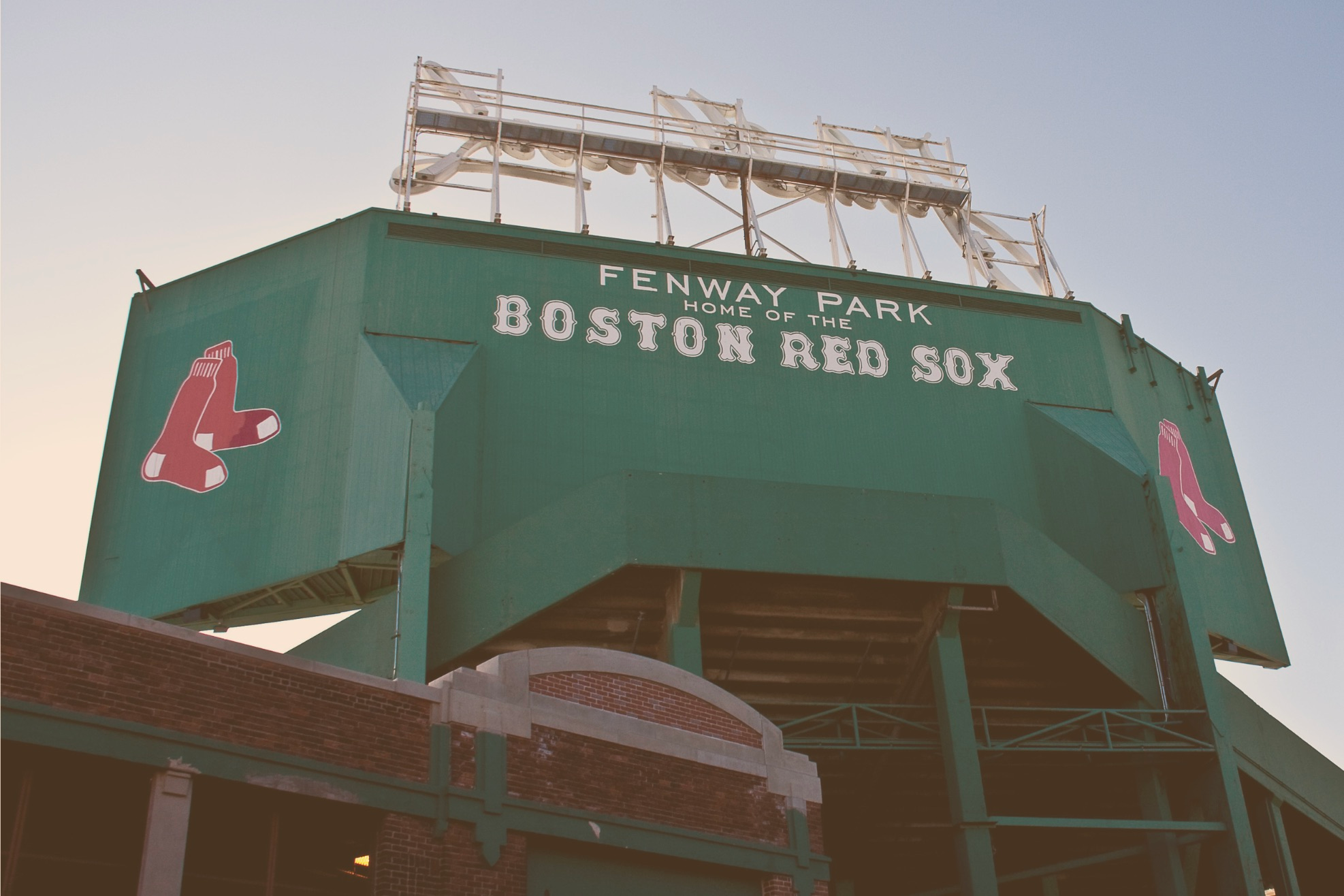
For 113 years, Fenway Park has been presented to the public as sacred ground: Boston pride, baseball tradition, and summer nostalgia wrapped into one. But this July, that illusion cracked.
Hundreds of Aramark concessions workers, represented by UNITE HERE Local 26, staged the first strike in the ballpark’s history during a high-profile Red Sox–Dodgers homestand.
The first strike in Fenway Park’s history came down to one thing: survival.
Workers are demanding what should be baseline: living wages, fair scheduling, health benefits, and respect. Many earn just $15–$17 an hour, often without guaranteed hours or year-round employment. Meanwhile, fans pay $10.79 for a single beer, and Aramark, the multibillion-dollar food services giant that runs Fenway’s concessions, continues to post record profits.
In other words: Reality keeps receipts. The boardroom keeps secrets.
The Workers Behind the Experience
Concessions workers aren’t just background labor, they are part of the fan experience. They’re the ones pouring your drinks, wrapping your hot dogs, cleaning up after your mess. They endure the heat, the long hours, and the demanding crowds, often with little more than seasonal contracts and unpredictable shifts.
Many are Black, brown, and immigrant women who have served Fenway’s fans for years, even decades, without the compensation or job security that reflects their value. They pour the drinks, serve the food, and create the gameday experience, all while earning $15-17 an hour with no guaranteed shifts.
This math forces an uncomfortable question: who benefits from Fenway’s traditions, and who struggles to survive while maintaining them?
Amanda Savage, a longtime vendor, put it bluntly: “I personally made half as much as I made the first year, and this year, I’m on track to make half of what I made last year.” Despite working the same grueling hours, she and her coworkers are watching their earnings shrink as the cost of living skyrockets.
“This isn’t just a labor issue. It’s a community issue,” workers wrote in an open letter. “It’s about whether the people who serve the hot dogs, pour the beer … can afford to keep living in the city we love.”
Aramark’s Profits vs. Worker Reality
Aramark posted $17.4 billion in revenue in fiscal 2024. Its CEO, John Zillmer, took home $18.7 million in compensation that same year. And yet its frontline workers, many of whom must work multiple jobs to survive, are still fighting for affordable health care and predictable schedules.
Senator Bernie Sanders called for fair wages and automation protections for Fenway workers in a statement to Aramark’s CEO: “If Aramark can afford to pay you $18.7 million in compensation… it can afford to pay all of your workers a living wage and not threaten to take away their jobs and their income with faceless Mashgin touchscreen computers.”
Boston’s City Council has now added its voice as well, passing a resolution that condemns Aramark’s wage practices despite its $1.4 billion profit. The Council called out “grab and go” kiosks as job killers that “compromise the character of the historic ballpark” and pledged to boycott concessions during any strike. It’s a rare moment when local government explicitly sides with labor against a billion-dollar corporation.
Behind every sellout crowd is a workforce making less than minimum respect. And this isn’t just a Fenway story. It’s a blueprint for how exploitation hides in plain sight,inside stadiums, airports, campuses, and convention centers. The spaces built for mass enjoyment are sustained by mass precarity.
Taking the Fight Abroad: The “Fenway Five” in Liverpool
The struggle didn’t stay in Boston because the money doesn’t either. Two weeks ago, five Fenway concessions workers dubbed the “Fenway Five” traveled to Liverpool, England, exposing how modern sports operate as global extraction machines.
Aramark doesn’t just run food services at Fenway; it also operates at Anfield Stadium, home to Liverpool FC. Both teams share the same owner: Fenway Sports Group, which profits from a billion-dollar sports empire while workers at their venues earn poverty wages on two continents.
“Our dispute isn’t technically with FSG, it’s with Aramark,” Charbel Salameh, a beer vendor at Fenway for 28 years, told the Liverpool ECHO. But the connection runs deeper: FSG owns both teams while Aramark operates concessions at both venues.
“Negotiations are stalling, it’s going back and forth,” Salameh explained. “We’re looking at significant increases in our wages for a lot of behind-the-scenes people, who are not able to earn gratuities.”
By traveling to Liverpool, the Fenway Five sent a clear message: sports empires can’t turn a blind eye while their workers are underpaid, no matter which side of the Atlantic they’re on.
This is the new reality of sports capitalism: teams aren’t local franchises anymore, they’re tentacles of international investment groups. FSG packages Boston nostalgia, Liverpool tradition, Pittsburgh hockey, and NASCAR racing into a global portfolio built on community loyalty and solidarity, while workers at every venue battle the same subcontractors for living wages.
Standing outside Anfield before the season opener, supported by Unite the Union North West, the Fenway Five weren’t just drawing attention to their own struggle. They were exposing how “community ownership” and “fan loyalty” become marketing tools while the people who create the gameday experience get squeezed by the same corporate playbook, whether they’re in Massachusetts or Merseyside.
Upon returning stateside, Local 26 President Carlos Aramayo emphasized to Boston.com, “Our members are going to do whatever it takes to try to get this across the finish line. “If that means taking three days out of work and flying back and forth to England, then that’s what we’re gonna do.”
A First in 113 Years, But Probably Not the Last
What made this summer’s strike historic wasn’t just that it happened at Fenway for the first time. It was that workers refused to remain invisible.
“This is a situation with a concessionaire … trying to pay bottom dollar,” said Aramayo. “A concessionaire not willing to deal with technology issues … The culture of this place is you want a guy with a Boston accent to hand you a Sam Adams and not a robot.”
Although the first strike lasted just three days, its impact reverberated. Many fans joined in solidarity, refusing to buy food or drinks inside Fenway. Weeks later, as negotiations stalled, workers rallied again before a Red Sox–Royals game, warning that the next walkout could be indefinite.
“Aramark, give these people what they deserve,” said union worker Dion Breeden. “This is the backbone of your business.”
Wages remain a flashpoint, , with workers noting that many comparable local jobs pay more. And Aramark’s $1.4 billion in profit last year proves the company can afford to do something about it.
Automation has also become a sticking point. Workers say the introduction of self-serve technology is reducing hours and increasing problems. “We’re having a lot of overserving with these machines, a lot of underage drinking, because there’s too many registers to too few people,” said Local 26 member Natalie Greening.
The technology that’s supposed to streamline operations is creating new headaches. Aramark’s Mashgin touchscreen systems mean fewer worker hours but more chaos for the remaining staff to manage, without additional pay or support. Workers end up responsible for problems they didn’t create, while the company pockets the labor savings.
For workers like Greening, the stakes extend beyond current conditions to the future of their jobs and their union’s power to protect them. The workers’ response is simple. They’re daring the company to try replacing them, knowing a walkout would shut everything down. Automation can’t solve that problem.
“They should be scared of how powerful our union is here,” Greening warned. “The next time we go out, it could be indefinitely.”
The Red Sox and the Corporate Response
As worker power and the threat of indefinite action garnered more attention, corporate damage control kicked in. Aramark issued a statement saying it respects employees’ right to demonstrate and wants to bargain in good faith. Workers disagree. “They haven’t been to the table in three weeks. They’ve not even responded to us,” union member Bob White told NBC Boston. “Everything they’re saying … all lies.”
The Red Sox organization also weighed in, emphasizing that it is not a party to the negotiations. “The club does not have a seat at the negotiating table, but we remain hopeful that the two sides can reach a swift agreement,” the team said in a statement.
The Red Sox’s hands-off stance is strategic fiction. While they claim no seat at the negotiating table, they hold the contract that keeps Aramark operating at Fenway. FSG could pressure their contractor to settle tomorrow if they wanted to. Instead, they’re content to let workers fight a billion-dollar subcontractor while the team protects its brand.
It’s the perfect setup for ownership: profit from low labor costs while maintaining plausible deniability about worker conditions. The Red Sox get to be the beloved hometown team while Aramark plays the villain.
Labor Isn’t Seasonal
The fight at Fenway is about dignity, belonging, and whether workers who fuel a city’s traditions get to share in its rewards or are treated as disposable extras behind the curtain.
“Boston is a union town, and it’s time to bring all Fenway workers’ wages up to standard,” Aramayo added. “They deserve raises and respect!”
No matter how iconic the venue, no workplace is immune from the consequences of underpaid, undervalued labor. The ballpark isn’t safe from the bosses. But as Fenway’s concessions workers have made clear, the bosses aren’t safe from the workers either.
Primary Sources:
- UNITE HERE Local 26 press releases and public statements, July–August 2025
- Aramark SEC filings, FY2023–2024
- AFL-CIO Paywatch data on Aramark executive compensation
- Boston Globe, WBUR, WBZ-TV and Axios Boston reporting on Fenway concessions labor dispute, August 2025
- Senator Bernie Sanders, Senate HELP Committee statement on Fenway Park workers, July 2025
- Boston City Council Resolution, August 2025
- Worker interviews collected by local reporters, 2025
Further Reading:
- Michael Silverman, “Concessions Workers Strike at Fenway Park,” Boston Globe, July 2025
- WBUR, “Why Fenway Workers Are on Strike for the First Time in the Park’s History,” July 2025
- Steven Greenhouse, “Ballpark Labor Fights and the Service Industry’s Union Wave,” The Guardian, August 2025
- Dan Haygarth, “‘We’ve travelled 3,000 miles to Liverpool to make our voices heard,’” Liverpool ECHO, August 2025
