

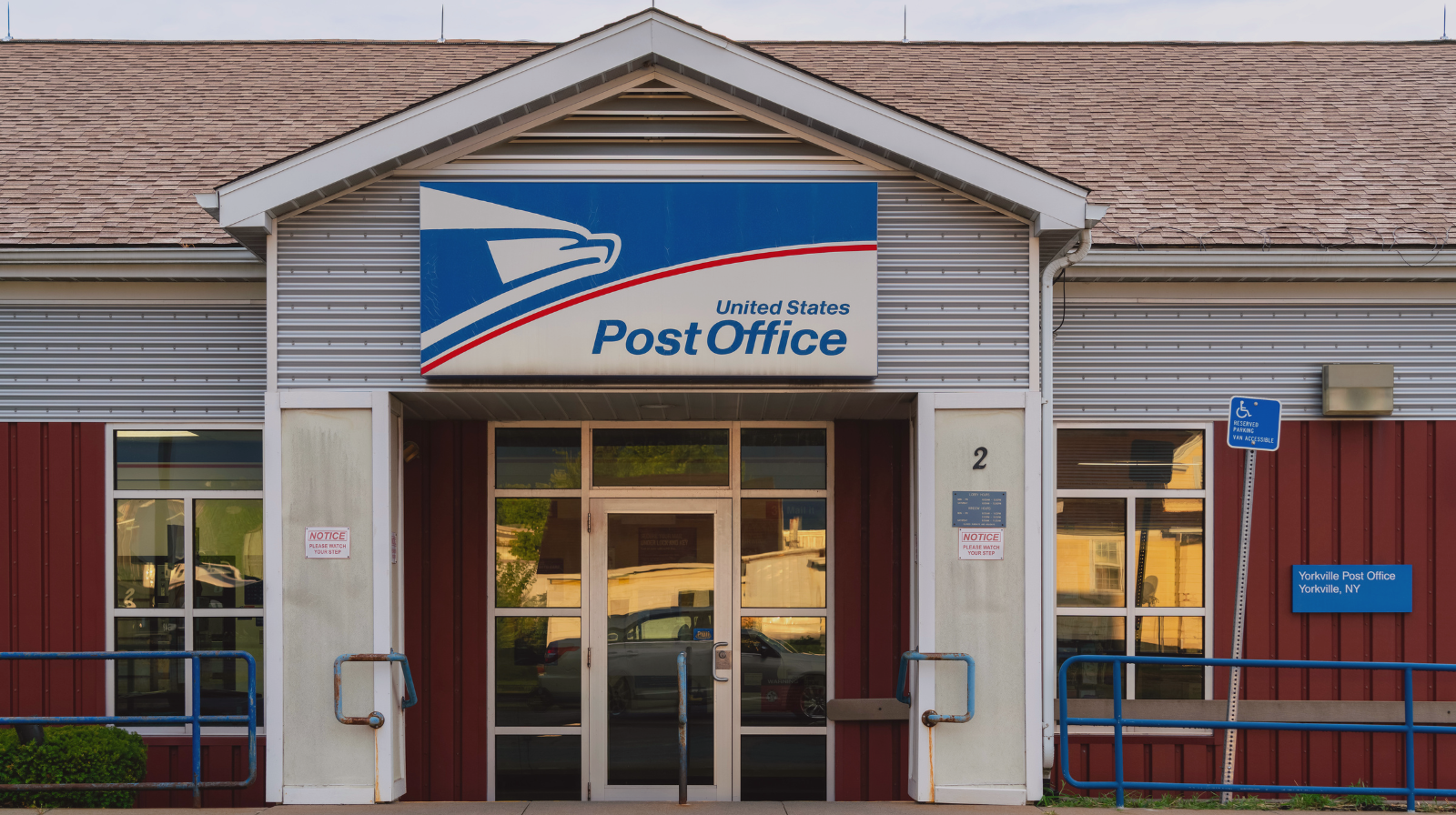
On Friday, May 22, the contract between the National Association of Letter Carriers and the U.S. Postal Service expired without a successor agreement. Negotiations have moved into a 60-day mandatory mediation period, and should that fail, the dispute heads to binding interest arbitration.
NALC members rejected the previous agreement by 72 percent in February 2025, marking the first successful vote-no campaign in the union since 1978. More carriers turned out to oppose it than had cast ballots on the prior contract altogether. Despite this achievement, an arbitrator’s binding award imposed virtually the same terms members had just voted down within a week.
“What we’re dealing with is really a long hangover, from that betrayal,” said Tyler Vasseur, a Minneapolis letter carrier, shop steward in NALC Branch 9, and member of Build a Fighting NALC, the rank-and-file reform caucus that organized the vote-no campaign. “Members really felt the betrayal from leadership. They basically worked with management, or so it came across to most members, to force through the contract that we had just voted down.”
While letter carriers were waiting on an agreement with little visibility into bargaining, Vasseur noted, UAW members won raises of 25 percent through their 2023 stand-up strike against the Big Three automakers, and UPS Teamsters secured $7.50 an hour in wage increases over the life of a new five-year contract. “NALC members saw that and thought, oh my god, 20% raises, that looks incredible! Meanwhile, we were in the middle of negotiations. We not only were not being mobilized publicly to fight for a contract, winning over public opinion, building support, putting pressure on management. We also had no idea what we were even negotiating over.”
Across the union, carriers have continued pressing the same demands that went unaddressed in the last contract. They have called for raises that keep pace with inflation, an end to mandatory overtime, and a starting wage that workers in high-cost cities can actually live on. Yet new talks opened in February and have continued largely without the public organizing that defined the previous cycle. NALC held a members-only update Friday night, hours before the deadline, and from what Vasseur could gather, the meeting amounted to a procedural walk-through. “Nothing has moved on things that are most important to letter carriers, which is raises. Those, as far as I know, have not been touched at all.”
Working conditions have shifted substantially over the past two decades. Since 2006, mail volume has declined nearly 50 percent as electronic communication displaced physical correspondence, while package volume rose in parallel as USPS expanded its role as a last-mile delivery partner for private carriers, most notably Amazon. Route lengths have grown over the same period, driven by the consolidation of sorting facilities under the agency’s “Delivering for America” plan, rerouting carriers from local post offices to larger regional centers. Health and safety concerns have mounted alongside those structural changes. Postal employees consistently rank among the highest for occupational injuries across federal agencies, facing hazards that range from heavy machinery and vehicle collisions to the sharp increase in robberies of letter carriers in the early 2020s, fueled in part by demand for the arrow keys that open neighborhood cluster mailboxes. Several postal workers were killed on the job in recent years, and NALC has pressed for stronger protections in both legislation and bargaining.
Beyond the physical toll, mandatory overtime in the most expensive cities has become inseparable from financial survival. “Entire cities in particular in high cost of living areas, where workers are forced to work 10, 12 hours every single day, 6 days a week, because otherwise they couldn’t afford to live in New York City, or Boston, or Los Angeles,” Vasseur said. “We’re back to fighting for an 8-hour workday, but with pay that allows you to be able to work 8 hours and not have to work overtime, in order to make ends meet.”

While carriers contend with those issues, USPS management has spent the spring overhauling the agency. In March, they retained Alvarez & Marsal, the restructuring firm known for managing the Lehman Brothers wind-down and the Toys R Us liquidation. Weeks later, the agency suspended its employer pension contributions, freeing roughly $200 million every two weeks and an estimated $2.5 billion through the fiscal year. At the May 8 Board of Governors meeting, Postmaster General David Steiner publicly proposed ending six-day-a-week delivery and shutting down most local post offices. When asked about layoffs, he responded, “Look, what I’ve said is that we are in a crisis, and when you are in a crisis, everything has to be on the table.”
The critical financial pressure Steiner invoked predates his tenure. The 2006 Postal Accountability and Enhancement Act required USPS to pre-fund decades of retiree health benefits within a ten-year window. NALC has consistently argued that the prefunding burden, imposed on no other federal agency, accounted for 92 percent of postal losses since 2007. Congress repealed the mandate in 2022, but the financial hole it created remains, and management’s invocation of fiscal emergency has become a fixture of every bargaining cycle.
From Vasseur’s perspective, that posture has gone unchallenged by the union. “The unfortunate reality is the current leadership of the National Association of Letter Carriers kind of just accepts that logic. They don’t have any creative sort of solutions to actually solving the problem. They just accept that logic and say, yep, the Postal Service is in crisis, so don’t expect a big raise.”
The prospect of privatization looming over postal unions a year ago has receded, in Vasseur’s assessment, though it has not disappeared entirely. Trump confirmed his intentions in February 2025 to fold USPS into the Commerce Department, and the unions and 159 House members responded with a letter warning the move would violate the 1970 Postal Reorganization Act. By spring, a Wells Fargo memo outlined how privatization could work in practice, proposing an IPO of the package business, price increases of 30 to 140 percent, and a sell-off of USPS’s $88 billion real estate portfolio, with the unions flagged as the primary obstacle.
“At the moment, it doesn’t feel as big of an immediate threat as it did this time last year,” Vasseur said. For now, the Trump administration is consumed with the war in Iran. What Vasseur sees as more pressing are federal or state-level restrictions on mail-in voting heading into the 2026 midterms. Yet even with that pressure eased, management’s position has not changed. “Even if there’s not an immediate threat of privatization, what we can expect is that they will use the financial crisis in negotiations to leverage against the unions and any attempt to get significant wage increases that are commensurate with inflation.”
“We’re back to fighting for an 8-hour workday, but with pay that allows you to be able to work 8 hours and not have to work overtime, in order to make ends meet.” — Tyler Vasseur
NALC’s bargaining strategy has ruled out strike action, prohibited under the 1970 Postal Reorganization Act. Instead, the presidents of all four postal unions sent a joint letter to Congress earlier in May, requesting expanded borrowing authority, pension fund investment powers, and accounting changes for legacy retirement obligations.
Vasseur questioned whether that approach can produce results. “Look at this Congress. This Congress can’t do anything. The Trump administration, Trump himself is able to just kind of steamroll Congress. They can’t even stop the Trump administration from conducting an illegal and awful war. I do not expect that this Congress is going to be able to, if the Trump administration really wants to push ahead with privatization, that they would have any backbone or ability to stop that.”
Postal advocacy groups have warned the likelier danger may be privatization by stealth, meaning a gradual degradation of service and contracting-out that would not require a Congressional vote. “The only thing that would stop privatization is, at the very least, mass mobilization of the postal unions, the broader labor movement, and public opinion to fight back against it,” Vasseur said.
On Saturday morning, the day after the contract expired, BFN members and aligned rank-and-file groups held informational pickets at postal stations around the country, Vasseur said, calling for a $30-an-hour starting wage and a ratio of one manager for every 30 workers, a pair of demands the caucus calls “30 for 30.” The caucus is also advancing a Fund Services Not War resolution, passed in Branch 9 in April and headed to the union’s national convention in August, calling on NALC and the AFL-CIO to oppose the Iran war on both moral and economic grounds and to redirect war spending toward public services including the Postal Service.
USPS will adopt the same dimensional pricing methodology used by FedEx and UPS on July 12, seven weeks into the mediation period. Negotiations for a successor agreement will continue against that backdrop, with Steiner’s stated position the agency’s business model is “unsustainable” and management’s restructuring moving forward on one side of the table, and union leadership committed to the framework of Congress and binding arbitration on the other.
